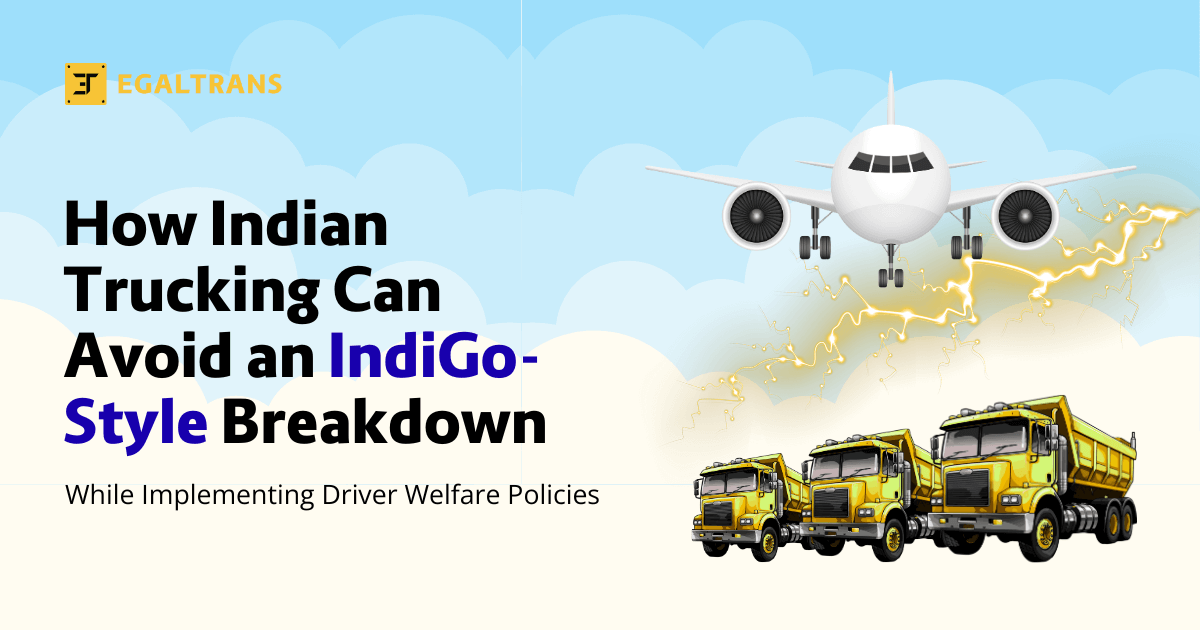
Chaos descended in airports across India when IndiGo cancelled over 1,200 flights in just 4 days: December 2-5, 2025. Passengers slept on terminal floors. Connecting flights were missed. Business trips collapsed. The reason? A workforce rule changed, and despite nearly two years’ notice, the airline still wasn’t ready.
The DGCA had introduced revised FDTL rules in January 2024, with Phase 2 taking full effect from November 1, 2025. These rules increased mandatory rest hours from 36 to 48 hours weekly, reduced night landing limits from six to two per week, and imposed stricter duty hour caps-all necessary safety reforms. But IndiGo, India’s largest carrier with 63% market share, didn’t adequately prepare despite having nearly two years’ warning. The result has been immediate and severe. Over 1,000 flights were cancelled in four days, affecting hundreds of thousands of passengers. In November alone, IndiGo cancelled 1,232 flights, with 755 due to crew and FDTL constraints. The airline’s on-time performance crashed from 84% to just 35% on December 2, then further plummeted to 19.7% on December 3.
The breakdown revealed something very fundamental: when an essential industry alters its manpower rules overnight without the adequate manpower to carry out those rules, the whole system breaks down.
India’s trucking sector now stands at a remarkably similar crossroads. Regulators are actively debating structured driving hours, enhanced safety mandates, and dual-driver protocols-a system calling for two licensed drivers per truck on long-haul routes to take turns in driving and resting. Drivers desperately need those improvements. The industry does, too.
But trucking doesn’t work within the nicely scheduled, centralised ecosystem of aviation. Trucks keep factories running, stock every kirana store, move every bag of cement, and bring every litre of milk, diesel, and medicine to India’s last mile. In fact, as per the data from NITI Aayog, road transport is handling more than 65% freight of the country and providing jobs to about 10 million people either directly or indirectly.
When aviation stumbles, passengers suffer inconvenience. When trucking stumbles, the entire economy gasps for air.
This is why trucking must learn from the IndiGo breakdown-not repeat it.
Why the IndiGo Breakdown Matters for Trucking
In full effect from November 1, 2025, were the Phase 2 FDTL rules of the DGCA, forcing airlines to operate with stricter night operations limits-two night landings a week instead of six-and extended weekly rest requirements of 48 hours instead of 36. IndiGo simply did not hire enough pilots despite nearly two years’ notice. Schedules fell apart. The airline cancelled more than 1,200 flights between late November and early December. Passengers scrambled for alternatives. Ticket prices on competing airlines spiked-some Delhi routes crossed ₹1 lakh. On December 5, 2025, the government ordered a high-level inquiry and the DGCA granted temporary relief by withdrawing certain FDTL provisions, effectively acknowledging the crisis.
Now imagine a similar disruption in trucking-but on steroids.
Unlike pilots who work in shifts planned weeks in advance, truck drivers don’t operate on predictable schedules. Many drive 14-16 hours straight because the market rewards speed over safety. Industry estimates are that India currently faces a shortage of 2-3 lakh trained commercial drivers, with the demand growing by 8-10% annually. If India introduces fixed driving hour limits or compulsory dual-driver rules without first expanding substantially the driver workforce, the freight network will seize up within days.
What drivers say themselves: A discussion with the long-haul drivers reveals their reality. Rajan Singh drives along the Delhi-Chennai corridor and says, “We want rest. We want safety. But if I take proper breaks, I lose loads to drivers who promise faster delivery. The system punishes us for following rules that don’t even exist yet.” Drivers say they are under pressure from fleet owners, brokers, and clients to cut transit time at any cost-including health and safety.
IndiGo is in the throes of what experts describe as an “unprecedented operational meltdown.” The crisis has sparked parliamentary debates, government inquiries, and massive public backlash. Civil Aviation Minister Ram Mohan Naidu directly blamed IndiGo’s “mismanagement of crew scheduling” as the root cause, observing that other airlines like Air India and SpiceJet adapted smoothly to the same rules.
The lesson is straightforward: IndiGo had almost two years between rule announcement, January 2024, and Phase 2 implementation, November 2025, and it still failed to prepare adequately. It even implemented a hiring freeze during this period. Trucking cannot afford to make this same catastrophic mistake.
Why Trucking Is Even More Vulnerable
Trucking in India operates on a very different structure than aviation. The fragmentation is extreme, with industry data indicating that roughly 77% of India’s commercial vehicle fleet is owned by operators with five trucks or less. Many are single-truck owners. Drivers work long hours without formal rest schedules. Documentation is minimal. Margins are razor-thin. Formal recruitment pipelines barely exist outside major logistics companies.
If regulators introduce strict work-hour rules or dual-driver mandates across long routes starting tomorrow:
- Finding trained drivers will be a challenge for fleet owners: small operators have no HR departments, no hiring processes; they wholly depend on informal networks and word of mouth.
- Operational expenses will increase on the spot, two-driver operations approximately double wage costs along with added food, accommodations, and insurance costs
- Shipments will slow significantly: with insufficient drivers, trucks will park; delivery timelines will extend.
- Market prices will show a sharp reaction: increased transportation costs are passed on to the consumer in 48-72 hours.
- Essential goods may run short regionally: Perishables, medicines, and fuel are particularly vulnerable to distribution disruptions
The aviation industry was organized, well-capitalized, and highly visible – and it still failed to absorb sudden regulatory change. Trucking is unorganized, operates on thin margins, and lacks mechanisms for a coordinated response. Its systemic risk is exponentially greater.
What Trucking Must Learn From IndiGo 2025
1. Never Enforce Before Expanding Manpower
This is the central lesson: regulation should follow, not precede, workforce expansion. And IndiGo is demonstrating this very lesson in real time. Despite having almost two years between the announcement of the rule (January 2024) and Phase 2 implementation in November 2025, the airline catastrophically failed to prepare. Pilot unions report that IndiGo actually implemented a hiring freeze during that critical preparation period. The airline admitted it “misjudged” crew requirements. The training infrastructure that existed in October 2025 was woefully insufficient for November 2025—and building new training capacity takes years, not months.
What’s even more disturbing: Both ALPA and FIP claim that the same FDTL rules were implemented without a glitch by other airlines like Air India, SpiceJet, and Akasa because they had planned accordingly and hired properly. The IndiGo crisis wasn’t a result of impossible rules; it was caused by failure of its management to prepare despite adequate warning.
Trucking must avoid this sequencing trap entirely. Before announcing mandatory dual-driver rules or strict hourly limits, India needs a concrete plan to add an estimated 5-7 lakh trained drivers to the workforce over 24-36 months. This requires immediate expansion of:
- Government ITI programs with commercial driving modules
- Skill India-certified training centres across Tier-2 and Tier-3 cities.
- OEM-run driver academies (Tata, Ashok Leyland, Mahindra)
- Private sector training partnerships with fleet operators
2. Build Deep Industry Alignment Early
Airlines, airports, and the DGCA did not coordinate effectively in preparation for the implementation of Phase 2 rules in November 2025. DGCA approved IndiGo’s winter schedule, the peak travel season, without adequate verification if the airline has the required number of pilots under the new norms. The information gaps were huge. There was little contingency planning. The consequence is the crisis unfolding before our eyes.
Trucking involves far more stakeholders, transporters, brokers, mandi networks, ports, container freight stations, warehousing hubs, fuel stations, highway toll operators, and of course, drivers themselves. Regulators must bring all of them into the planning room from day one. This means:
- Quarterly consultations with stakeholders in the course of policy development
- Regional workshops in major freight corridors – Delhi-Mumbai, Chennai-Kolkata, Ahmedabad-Pune
- Direct engagement with driver unions and welfare associations
- Transparent data sharing on implementation timelines
3. Create Operational Buffers and Stand-by Capacity
Aviation requires standby pilots for schedule disruptions; likewise, trucking demands standby drivers. Without a trained reserve pool, even just a little buffer of 10-15% excess capacity, any disruption in the weather, accidents, or festival demands can freeze entire freight corridors.
Building this buffer requires making truck driving an attractive, stable career and not a profession of last resort. Current challenges include:
- Social stigma around driving as manual labor
- Long periods away from family without adequate rest facilities
- No benefits related to formal employment, such as PF, health insurance, and pension.
- Unsafe highway conditions and poor driver amenities
The profession’s attractiveness goes along with improvement in workforce capacity.
Aviation vs Trucking: What a Breakdown Looks Like
| Factor | Indigo Disruption (2025) | Trucking Disruption (Hypothetical) |
|---|---|---|
| Economic Impact | ₹700–900 crore losses in days | ₹4,000–₹10,000 crore losses per day across FMCG, pharma, fuel and manufacturing |
| Supply Chain Impact | Passenger delays, minor cargo delays | Ports choke, factories halt, mandis run empty, retail prices spike |
| Recovery Time | 3–7 days | Several weeks due to cascading backlog |
| Public Impact | Travel inconvenience | Shortage of essentials, inflation, industrial downtime |
| Cause of Disruption | Pilot shortage under new rest guidelines | Driver shortage if rest mandates or dual-driver rules rollout suddenly |
| Industry Structure | Organised, predictable | Unorganised, highly volatile |
The bottom line: Aviation chaos inconveniences people. Trucking chaos slows the entire economy and hits the poorest consumers hardest through food and fuel price shocks.
Planning the Dual-Driver Policy Without Breaking the System
A requirement for two drivers on long routes-primarily those above 500 km-is logically imperative and ethically essential. In this way, it greatly prevents accidents due to fatigue, enhances driver health conditions, and places India in line with global safety standards practiced by the EU, US, and Australia. Latest estimates suggest 30-40% of highway accidents involve driver fatigue as a contributing factor.
But the challenge in implementation is huge. Here’s how India can execute this reform without freezing freight movement:
1. Roll Out the Policy in Carefully Planned Phases
Phase 1 (Months 1-12): Pilot Corridors
- Begin with 5-6 high-risk interstate corridors: Delhi-Jaipur, Mumbai-Pune, Chennai-Bangalore, Kolkata-Bhubaneswar, Ahmedabad-Rajkot
- Focus on night driving routes where fatigue risk is statistically highest.
- Compulsory dual driver only if truck exceeds 12 hours on total trip time.
Phase 2 (Months 13-24): Major Highways
- Extend to all Golden Quadrilateral routes
- Adding the requirement for dual-drivers for all trips over 10 hours
- Start tracking compliance via AIS-140 GPS devices
Phase 3 (Month 25-36): National Rollout
- Gradual implementation along all state and national highways
- Full enforcement with penalties for non-compliance
- Exception mechanisms for specialized cargo with documented driver rotation
2. Massively Scale Driver Training Infrastructure
India needs to train 15,000-20,000 new commercial drivers every month to meet demand. It trains about 6,000-8,000 a month currently. In order to bridge this gap:
- Government ITIs: Add commercial driving programs in more than 500 additional ITIs across India
- Skill India Programs: Launch targeted “Highway Heroes” initiative with free training and placement.
- OEM Academies: Tie up with Tata, Ashok Leyland, Mahindra, Volvo-Eicher to triple the academy capacity.
- Private Training Centres: Provide tax incentives to accredited private driving schools.
- Fast-Track Licensing: Streamline RTO processes to reduce licensing delays presently faced from 3-4 months to 4-6 weeks.
3. Provide Direct Financial Support to Small Fleet Owners
Two-driver operations increase costs by 60-80% for small operators: wages, food allowance, accommodation, and insurance premiums. Without support, small fleets will either:
- Break the rules at your own risk.
- Exit the market altogether by reducing freight capacity
- Pass costs on to shippers, inflate prices
Recommended support mechanisms:
- GST input credit for expenditure on driver training
- Subsidized loans to modernize the fleet – newer trucks with better driver’s cabins
- ₹5,000-7,000 per month direct wage subsidy per additional driver for first 24 months
- Tax credits for operators who maintain 100% compliance with driver welfare norms
4. Establish a Verified National Driver Registry
Today, fleet owners find drivers through informal networks, references, and roadside hiring. The resultant information asymmetry increases fraud risk. Digitization to a registry system should:
- Maintain verified records of all commercial drivers (license validity, training credentials, accident history, health fitness certificates)
- Allow fleet owners to search and recruit drivers based on route experience and qualifications
- Enable drivers to showcase skills, build reputation, and access better opportunities
- Integrate with VAHAN and Sarathi databases for real-time license verification
- Balance driver privacy with legitimate hiring purposes
International precedent: The EU’s DTCO (Digital Tachograph) system and US CDL (Commercial Driver’s License) verification systems demonstrate this is achievable.
5. Automate Compliance Through Technology
Manual logbooks are easily manipulated. Paper records disappear. Enforcement becomes arbitrary. Instead:
- Mandatory AIS-140 GPS devices on all commercial vehicles over 3.5 tonnes (already partially implemented but poorly enforced)
- Electronic logbooks automatically recording driving hours, rest periods, route deviations
- Telematics integration tracking harsh braking, speeding, and fatigue indicators
- Real-time alerts to fleet managers when drivers approach hourly limits
- Automated reporting to transport authorities, reducing paperwork burden
This system protects drivers from exploitation, gives fleet owners compliance documentation, and allows regulators to enforce fairly without corruption opportunities.
A Comprehensive Regulatory Blueprint to Avoid an IndiGo-Style Meltdown
1. Forecast Driver Demand Before Announcing Policy
Regulators must estimate and publicly declare how many more drivers India needs according to proposed rules. This estimate should be:
- Transparent: Published online with clear methodology
- Realistic: grounded in actual freight volume data, not aspiration targets
- Regional: Accounting for variations in demand across states and corridors
- Updated quarterly: as market conditions and implementation progress evolve
Example calculation: Assuming India has 50 lakh commercial trucks, 35% run long-haul routes that require dual drivers, and the current driver-to-truck ratio is 1.1:1. The addition of roughly 19 lakh trained drivers will be required to institute a full dual-driver policy.
2. Give the Industry a Long, Clear Runway
Announce the policy, providing a 24-36-month runway for implementation. This runway enables:
- Train more in facilities that increase physical capacity and instructor cadres
- Financial planning by fleet owners to adjust and secure financing
- Drivers to enter training programs without rushed, low-quality certification
- The market can gradually absorb the cost increase and avoid price shocks
- Technology providers scale compliance solutions
Communication strategy:
- Month 0: Policy announcement with full timeline
- Month 6: First progress review and adjustments according to the training enrollments
- Month 12: Launch of pilot corridor
- Month 18: Mid-term review and course corrections
- Month 24: Expansion phase starts
- Month 30: Pre-national rollout readiness check
- Month 36: Full national implementation
3. Pilot the Rules on Major Corridors First
Testing. Learning. Course correction. Then scaling. Pilot implementation on 5-6 corridors allows for:
- Identification of unexpected operation issues
- Real-world data on cost impacts and driver availability
- Stakeholder feedback prior to national rollout
- Regional customization based on local conditions
- Proof-of-concept building for skeptical operators
4. Establish Continuous Loops of Communication
People-centered policy succeeds. When those affected feel involved instead of blindsided. True or false:
To drivers:
- Quarterly town halls in major truck stops and transport nagars
- WhatsApp groups and SMS updates on training opportunities
- Mechanism for addressing grievances regarding exploitation or injustice
- Direct representation in policy review committees
For fleet owners:
- Regional transport associations as formal consultation partners
- Dedicated hotline for compliance-related enquiries
- Online portal featuring FAQs, templates and guidance documents
- Regular webinars on technology adoption and financial support
For the public:
- Transparent progress dashboards: training numbers, pilot results
- Media briefings explaining why phased approach protects supply chains
- Case studies of early successful adopters
5. Digitize All Monitoring and Enforcement
Compliance led by GPS decreases disputes, rises in accuracy, protects drivers from unrealistic expectations, and lowers corruption opportunities. Digital enforcement should:
- Automatically generate compliance certificates
- Flag violations with photographic/GPS evidence
- Create audit trails useful for dispute resolution
- Integration with FASTag and e-way bill systems
- Real-time dashboards provided to regulators
Critical, digital systems should allow for offline fallback modes in areas of poor connectivity and simple interfaces for less tech-savvy operators.
Learning From International Models
European Union: Working Time Directive
- Drivers limited to 9 hours daily (extendable to 10 hours twice weekly)
- 45-minute break, mandatory after 4.5 hours of driving
- Weekly rest of 45 consecutive hours
- Accident rates dropped 23% over 5 years; strong enforcement through digital tachographs.
United States: Hours of Service Rules
- 11-hour daily driving limit with a 14-hour work window
- 30-minute break required after 8 hours
- 60/70-hour weekly limits
- Challenge: Difficulties in enforcement led to the ELD mandate in 2017
Australia: Heavy Vehicle National Law
- Fatigue management options, standard hours vs. advanced systems
- Chain of responsibility-shippers and receivers also liable for driver fatigue
- Innovation: Allows companies to design custom systems if they prove equivalent safety
This would mean adopting clear hourly limits from the EU, the technological enforcement of the US, and Australia’s chain of responsibility concept-where entire logistics chains are made accountable and not just drivers.
Addressing Counter-Arguments
“Immediate rules will save lives now; we can’t wait 2-3 years”
Poorly implemented safety rules that cause system collapse will cost more lives through medical supply disruptions, food shortages triggering malnutrition, and economic chaos than the phased approach prevents. Safety needs to be effectively implemented in a sustainable manner, not as a symbolic gesture.
“Market forces will naturally solve driver shortages”
Market forces have had decades and failed. Driver shortages will continue because trucking careers lack dignity, safety, and stability. Pure market mechanisms will not be able to fix social stigma or invest in training infrastructure-regulatory frameworks with government support are vital.
“Small operators cannot afford dual drivers; this will destroy livelihoods”
This is why financial support mechanisms-subsidies, tax credits, transition loans-are non-negotiable parts of the policy. The goal isn’t to eliminate small operators but to help them adapt without financial ruin.
What Happens Next: Action Steps for Every Stakeholder
For Policymakers:
- Commission detailed driver demand forecasting study, 3-month timeline
- Establish multi-stakeholder task force with quarterly mandates
- Allocate ₹5,000-7,000 crore budget for training infrastructure expansion
- Draft pilot corridor regulations with 24-month advance notice
- Create financial support package for small fleet owners
For Fleet Owners and Transport Companies:
- Telematics adoption: Start now (cost: ₹ 3,000 – 5,000 /vehicle one-time)
- Audit current driver roster and identify shortage gaps
- Establish partnerships with local driving schools.
- Join regional transport associations to participate in policy consultations
- Start building pools of “standby drivers” for operational flexibility
For Training Institutes and Skill Development Organizations:
- Scale commercial driving course capacity by 200% over 18 months
- Develop standardized curricula in tune with international safety standards.
- Offer flexible timing-evening/weekend batches-to attract career switchers.
- Create direct placement partnerships with logistics companies
- Launch rural outreach programs to tap underutilized workforce
For Service Providers:
- Develop affordable, rugged compliance technology for harsh Indian conditions.
- Develop multilingual interfaces for drivers and operators
- Design offline-capable systems for connectivity-challenged regions
- Offer financing options for small fleet technology adoption
- Integration with government databases: VAHAN, FASTag, e-way bill
For Drivers and Driver Associations:
- Enroll in available training programs to upskill and certify
- Organize collective representation in policy discussions
- Document and report exploitation or unsafe conditions
- Support peer education on safe driving practices
- Advocate for better highway rest facilities and driver amenities
Frequently Asked Questions (FAQs)
1. Why does India urgently need structured driver work-hour rules?
Driver fatigue is considered one of the leading causes of highway accidents and a contributing factor in an estimated 30-40% of commercial vehicle crashes. Beyond safety, exhausted drivers endure chronic health problems-hypertension, diabetes, cardiovascular disease-that shorten their working lives and career spans. Structured hours improve safety, health outcomes, and make trucking a sustainable, dignified profession that can attract younger talent.
2. How is trucking more fragile than aviation with respect to workforce disruptions?
Aviation is centralized, with ~6-7 major airlines, operates on fixed schedules, and has capital reserves to absorb short-term shocks. Trucking is radically fragmented, with millions of small operators; it runs on demand-driven schedules, operates on razor-thin margins (3-5% profit margins typical), and has no coordinated response mechanisms. Whereas a workforce gap in aviation causes delays, in trucking, economic paralysis results.
3. What would really happen if India instituted dual-driver mandates overnight?
Most small fleets, comprising 77% of the market, would not be able to find replacement drivers right away. Trucks would stop moving. Freight transport would decline by approximately 30-40% in just a week’s time. Ports would experience container congestion. Factories would shut assembly lines down. Perishable goods would spoil. The supplies of medicines would have regional shortages. Retail prices would increase within 72 hours. Recovery would take weeks because of cascading backlogs.
4. How would India increase its driver pool to meet the demand?
Achieve this through a four-pronged approach: (1) Government ITI expansion adding commercial driving to more than 500+ centers, (2) Skill India launching focused free training with stipend, (3) OEM academies tripling capacity through industry partnership, and (4) making truck driving socially respectable and financially attractive by bettering working conditions, benefits, and highway amenities. Target: 15,000-20,000 new certified drivers per month.
5. Will dual-driver operations bankrupt small fleet owners?
Without support, yes-costs surge 60-80%. With adequate support-incentives of ₹5,000-7,000/month for each additional driver for 24 months, GST input credits for training, subsidized loans for upgrading the fleet, and a sufficiently long transition period-small operators can comply. Financial mechanisms are an essential ingredient of this policy at every step, not mere diktats.
6. Does technology actually help with compliance, or is it just more bureaucracy?
Technology is a must. AIS-140 GPS devices automatically track driving hours with tamper-proof records that rule out disputes with paperwork or any corruption-related issues. For those, electronic logbooks create audit trails. Telematics detect fatigue patterns. Real-time alerts prevent violations before they happen. Where the EU and US have shown that digital enforcement works—proper implementation, not halfhearted, is needed by India.
7. What is the single biggest lesson from the December 2025 IndiGo crisis that trucking must internalize?
Never believe that advance notice itself is enough—there has to be actual workforce increase. IndiGo had almost two years between announcement of rules and Phase 2 implementation, from January 2024 to November 2025, yet catastrophically failed because management didn’t hire well and even imposed a hiring freeze. The other airlines under the same rules and having the same timeline Air India, SpiceJet, Akasa-all did fine because they actually expanded their pilot pools. The lesson here is straightforward: regulation is one thing, but it needs to be paralleled-not just preceded by-actual, verified manpower build-up with mechanisms for enforcement so that the operators cannot just overlook requirements for preparation.
8. How quickly would grocery store shelves begin to empty if trucking stopped?
Impacts in urban areas within 36-48 hours-in the forms of perishables like milk, vegetables, and bread. Rural areas within 72-96 hours. Medicines: Distribution gaps begin within a week. Fuel stations: Many start running dry within 4 to 5 days. Manufacturing necessitating just-in-time supply chains: Automotive, electronics production grinds to a halt within 3 to 5 days. Economic impact accelerates exponentially: ₹4,000-10,000 crore per day losses across sectors.
9. How can small fleet owners prepare for coming regulations?
Adopt inexpensive telematics now, ₹3,000-5,000 per truck, to baseline the current operations; assess route patterns for determination of which routes will need dual drivers; develop a pool of 2-3 reliable backup drivers through local partnerships; continue to be actively engaged with regional transport associations regarding policy developments; explore government financing options for compliance costs; document current operations such that the ability to comply during transition can be demonstrated.
10. Will structured driver policies actually make trucking safer and more attractive as a career?
Yes, definitively. Countries with strict driving hour regulations have much lower fatigue-related accident rates and longer average driver career spans; examples include the EU, US, and Australia. Younger people in India avoid trucking because of poor working conditions, family separation, and safety. This will make trucking a respectable middle-class job, instead of the job of last resort. Structured hours with predictable schedules will be introduced, proper rest facilities will be provided, and formal employment benefits such as PF, health insurance, and pension will be availed.
11. What role do shippers and receivers play in driver welfare?
They must be part of the “chain of responsibility,” to use Australia’s model. If a shipper imposes impossible delivery deadlines that force drivers to skip rest, the shipper shares liability. If a receiver creates multi-hour unloading delays that push drivers into fatigue, the receiver shares liability. This stops trucking companies and drivers from being squeezed by unrealistic demands from the rest of the supply chain.
12. How does India’s situation compare to driver regulations in other developing countries?
Brazil introduced driving hour limits, implemented over 5 years with heavy union involvement; mixed success, with some enforcement gaps. In 2016, China brought in mandatory electronic monitoring on all longhaul trucks; reduced accidents by 15%, but small operators resisted. Thailand’s 2019 reforms included subsidies for driver training; it is too early to evaluate the full impact. India’s fragmentation is more extreme than any of these, requiring even more careful implementation.
Future Outlook: Blueprint for Reform Without Collapse
Reforms are urgently needed to protect driver welfare in India. The human cost of current practices—accidents, health damage, exploitation—is unacceptable. According to road safety research, the economic cost of fatigue-related crashes runs over ₹15,000 crore annually. Reform is not optional.
But reform without proper execution is catastrophe. The December 2025 IndiGo breakdown is showing this fact in real time: essential industries cannot execute workforce rules in practice without actually expanding workforces, even when warned years in advance. IndiGo had almost two years between rule announcement and Phase 2 implementation—yet is currently suffering an unprecedented meltdown due simply to management’s failure to hire. Aviation is learning this lesson the hard way right now. Trucking must learn it proactively—before the lesson costs India far more.
The way forward is therefore clear:
First, massively expand driver training infrastructure and workforce capacity over 24-36 months. Add 5-7 lakh trained drivers to the system before mandating dual-driver requirements.
Second, implement regulations in carefully designed phases, starting with high-risk corridors and gradually expanding based on real-world results and workforce availability.
Thirdly, implement financial support for small fleet owners during the transition, and make sure the reform strengthens this industry rather than destroys livelihoods.
Fourth, digitization of compliance using GPS and telematics can make enforcement fair, transparent, and corruption-free.
Fifth, build continuous stakeholder engagement: drivers, fleet owners, shippers, and regulators must work together, not in isolated silos.
Sixth, accountability mechanisms should ensure that operators actually prepare rather than gamble that regulations will be relaxed. The IndiGo crisis has sparked accusations by pilot unions that the airline deliberately under-prepared to create a crisis that would force regulatory rollback.
This will need patience, coordination, and investment. It needs viewing driver welfare not as a cost but as an investment in India’s economic resilience. It needs treating drivers with dignity and trucking as a profession worthy of respect.
The alternative, sudden mandates sans preparation of the workforce, will repeat IndiGo’s chaos at a scale that will touch every Indian’s daily life. Empty shelves. Stalled factories. Price spikes. Economic disruption measured in days, recovery measured in months.
The trucking industry of India moves the country each and every day. As we modernize it, we must make sure that the wheels keep turning.
References
- IndiGo Flight Cancellation Crisis – December 2025 – The Hindu
[https://www.thehindu.com/news/national/indigo-flight-airline-cancellation-delay-status-live-updates-december-6-2025/] - IndiGo Crisis Sends Fares Spiralling – Business Standard
[https://www.business-standard.com/industry/aviation/indigo-flights-cancelled-delhi-airport-airfares-fdtl-125120500469_1.html] - IndiGo Crisis: Over 1,000 Flights Cancelled, Government Probe – The Wire
[https://m.thewire.in/article/travel/indigo-crisis-flight-cancelled-dgca-withdraws-pilots-weekly-rest-norm-airport] - Why IndiGo Flights Getting Cancelled – FDTL Rules Explained – The Tribune
[https://www.tribuneindia.com/news/india/why-are-indigo-flights-getting-cancelled-across-india-crisis-explained/] - IndiGo Cancels Over 100 Flights Amid Crew Shortage – Onmanorama
[https://www.onmanorama.com/travel/travel-news/2025/12/03/indigo-flight-cancellations.html] - Brand IndiGo in Turbulence: 1,200+ Flights Cancelled – Storyboard18
[https://www.storyboard18.com/brand-marketing/brand-indigo-in-turbulence-1200-flights-cancelled/] - India Road Transport Workforce & Freight Data – NITI Aayog Transport Division
[https://www.niti.gov.in/sites/default/files/road-transport-workforce-report-2024.pdf] - Economic Cost of Trucking Disruptions Modeling Study – ASSOCHAM Logistics Council
[https://www.assocham.org/research/logistics-disruption-impact-study-2024] - Driver Fatigue and Highway Safety Research Report – Indian Roads & Transport Engineers (IRTE)
[https://www.irte.in/publications/driver-fatigue-highway-safety-2024] - European Union Working Time Directive for Drivers – EU Transport Safety Council
[https://ec.europa.eu/transport/road_safety/topics/vehicles/driving_time] - US Hours of Service Regulations – Federal Motor Carrier Safety Administration
[https://www.fmcsa.dot.gov/regulations/hours-of-service] - Heavy Vehicle National Law – Australia – National Heavy Vehicle Regulator
[https://www.nhvr.gov.au/law-policies/heavy-vehicle-national-law]
Last updated: December 6, 2025